Through most of the spring and early summer, I focused on trail running, climbing at the gym, and getting out to the crag or into the mountains once every couple weeks. I was feeling good about my fitness, climbing my hardest grades yet in the gym and running several days a week.
I’m lucky enough to have a small trail network just out my front door, but it’s hard to stack up 1000+ ft of gain in a 20 mile week. Doing laps up and down a small hill coupled with some weight training seemed to be forming a good base.

Local trail cruising
At the crag I was top-roping with friends as well as exploring a different approach to top-rope solo (TRS). In order to TRS longer or more traversing routes, it’s important to periodically re-fix the line and I rely on trad gear to do this. This feels like a great way to build proficiency with gear with minimal fall risk.
To fix the route, one must transfer from rappel to a gear anchor then fix the line to that anchor and continue down on rappel. On the climb up you can weight the gear directly, un-fix the line then clean, or fix with clove hitches and test yourself cleaning on the move.
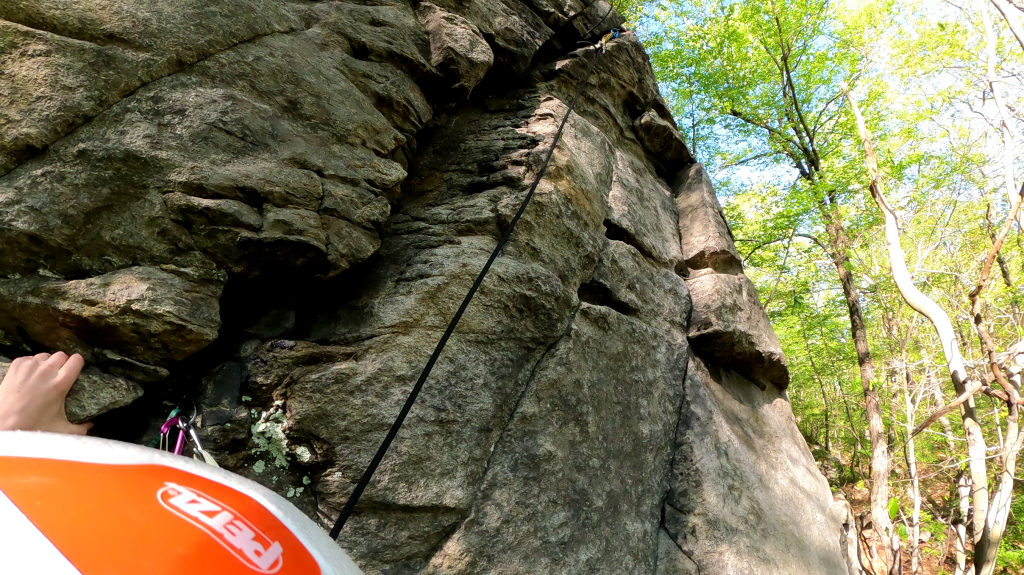
TRS – following my fixed line on the diagonal crack of Redemption Crag
Back in the White Mountains, I made a lap to the summit of Mt. Washington via Huntington Ravine. On another occasion I brought a pair of chill rock shoes to the ravine and headed up on the slabby rock, doing my best not to touch feet to the ledges.
In a spicier turn of events, I set off on a not-so-well conceived free solo of the Henderson Ridge (3 pitches, 5.4). The climbing felt manageable at first, but towards the end of the 1st pitch I moved off the ridge and on to a face that hangs above North Gully.
I think the combination of the exposed climbing and the backpack started to weigh on me. Though the holds were good; I was getting past some moves I knew could not be easily reversed. Objectively, I was getting panicked and I wasn’t committed enough to finish the route on-sight solo. I started down climbing and was soon back on the ground.
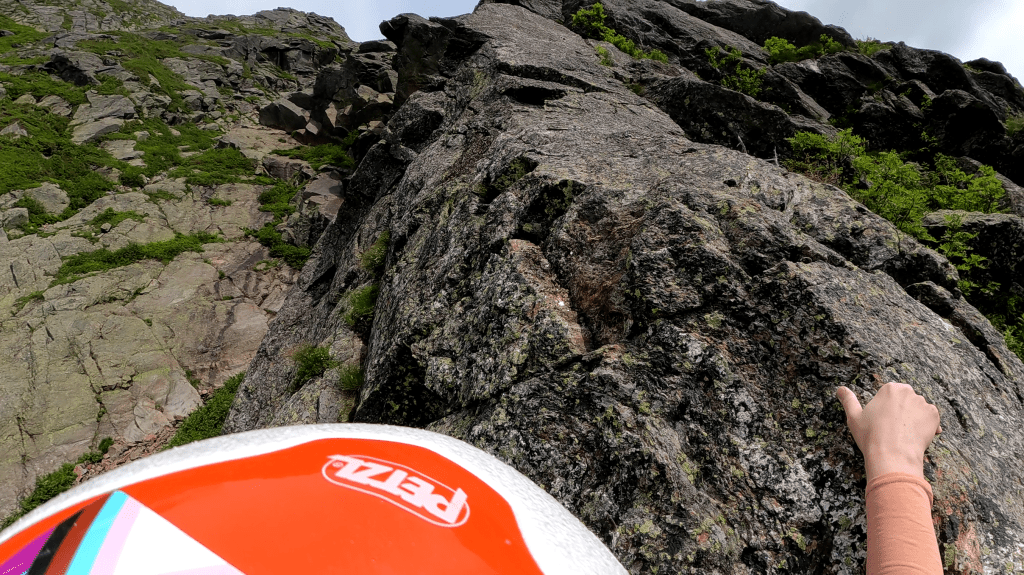
Near my high point on Henderson Ridge
This experience on the ridge was difficult to process but ultimately served as the catalyst for my first trad lead. After staring into the real jaws of doom without a belay, going up on a trad lead suddenly felt like not such a big deal.
A week after this I would take my friend and gym partner R to the crag. As we stood at the base of a mellow corner system he seemed to read my mind “so, you want to lead it?” he asked. He belayed me patiently as I painstakingly placed my gear, eventually topping out with an unmistakable “wooo!”.
On all of these mountain shenanigans I had also been shaking down the pack and gear I would use for my main objective of the season, Longs Peak. I planed to camp in the Rocky Mountain NP for 3 days and take as long as I needed to adjust to the altitude before climbing the peak via the Keyhole route.
All the arrangements were in place and my permit dates were fast approaching. I started tapering down my training and getting my stuff together. I made a packing list and went down the line, tent, sleep, clothes, food, stove, first aid, EPIRB. My haul pack for camp would be ~ 50 lbs and my summit pack under 20 lbs. I would camp at Goblins Forest, an easy 1 mi / 1000 ft hike from the trailhead and an ideal launching point.
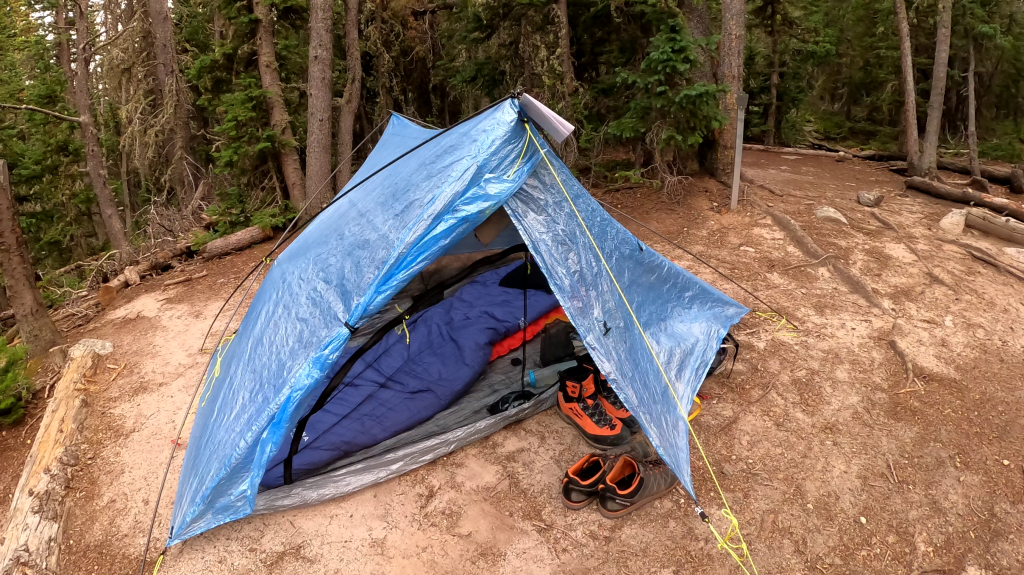
Chilling in the Goblin Forest at ~10,000 ft
It seems that most like to do the Keyhole as a day trip, so the trailhead is packed at 3 am. By noon, returning day parties will start to leave and you can easily park then head in. I did just that one fine August weekday afternoon. Taking the hike up to the camp site fairly easy, I felt good and super excited to move further up and see the peak.
I pitched camp, filtered a couple liters of water from the brook nearby, then re-hydrated some dinner and turned in for an early sleep. I could feel the altitude in my head a bit but I had been doing some short hikes around Boulder at ~5ooo ft and felt plenty capable.
At this point my plan was to get an alpine start to hike up to Chasm Lake and possibly scouting the gully that leads to the Loft. My alarm went off at 3 AM; I tossed in my warm sleeping bag for another 30 minutes before hauling myself out and getting dressed. I made some breakfast and coffee by headlamp and was on the move by 4 AM. Sipping coffee by headlamp at my cook spot 100m back in the forest felt very auspicious.
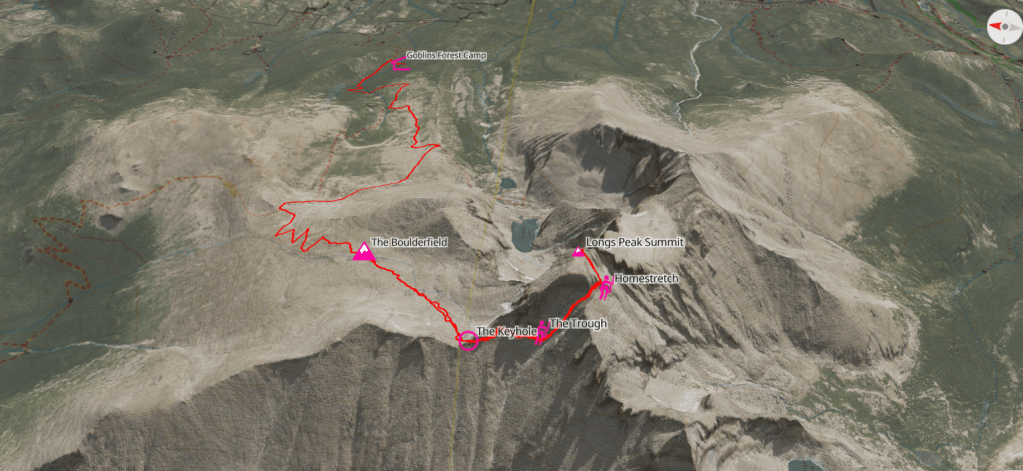
Longs Peak via the Keyhole, 3rd class, 11 hrs, 13 mi, 4800 ft ascent
The approach went well and as I neared the turn off for Chasm Lake, I decided that I might as well just head up towards the keyhole. I was making good time, feeling good, and genuinely psyched to get into some more engaging terrain. I would turn around at noon whether I made the summit or not.
Reaching the boulder field early in the day gave a breathtaking view of the peak and the enormous East face. The keyhole notch was clearly visible up ahead and I set off hopping across the boulders. I noticed there seemed to be some usable water running here and I planned to fill up on descent.

Sunrise on the iconic diamond East face of Longs Peak
Climbing up towards the keyhole, I stopped to put on a jacket and helmet. The wind was blasting through the keyhole itself and I knew I needed to get though the notch without delay.
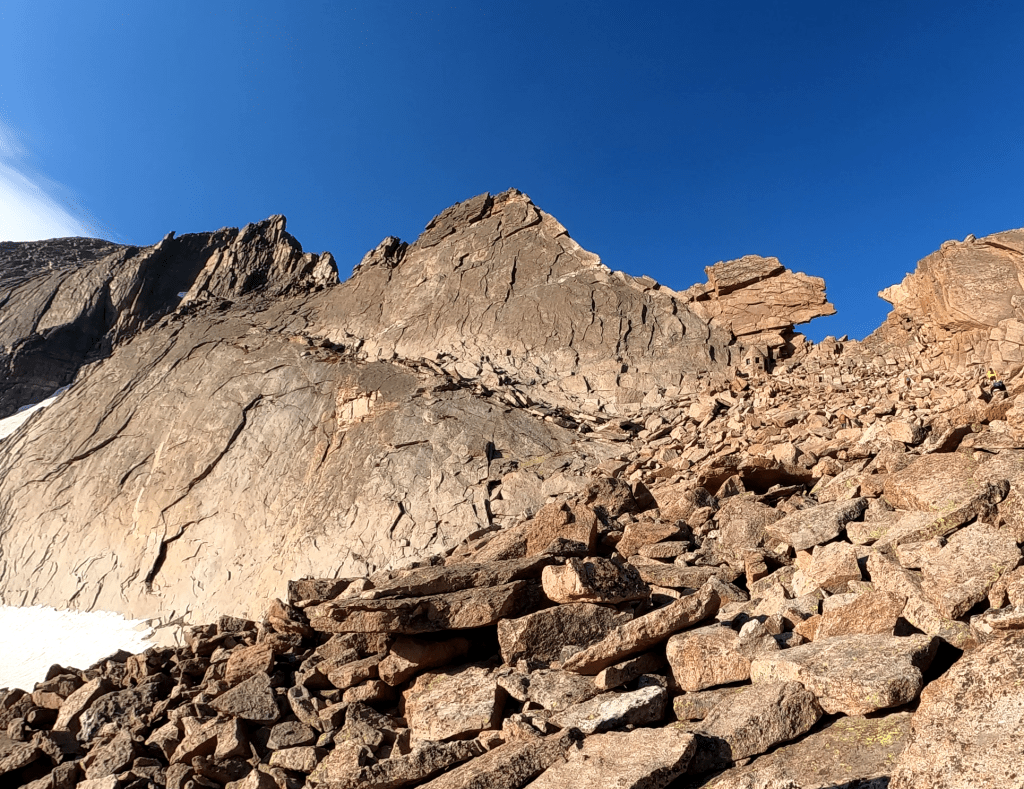
The Keyhole and Agnes Vaille Memorial Shelter
Passing through the notch marks the start of the more interesting climbing. The route is well marked by red and yellow circular blazes. The first section beyond the notch is called the ledges and follows sandy ledges or obvious lines on the rock.

Traversing the ledges above some awesome exposure
The rock allows one to choose their own adventure and I took some opportunities to climb cool features. The altitude wasn’t killing me but I definitely was moving slower than I would at sea level. The route is popular and there were a few other people moving along in each section.
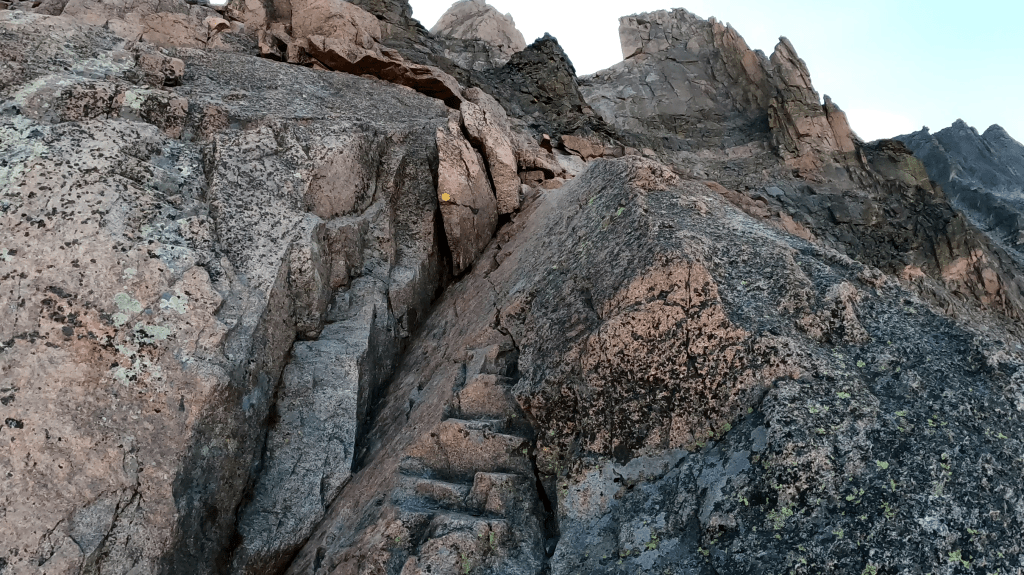
Pink granite dihedral approaching the bottom of the trough
The next section of the route is called the Trough and it’s essentially a big gross gully of loose rock. It’s not uncommon for those moving above to dislodge small rocks. I found the best climbing and protection from rocks on the right side of the gully against the wall. Down-climbing this section on descent was probably the least fun moment of the day.
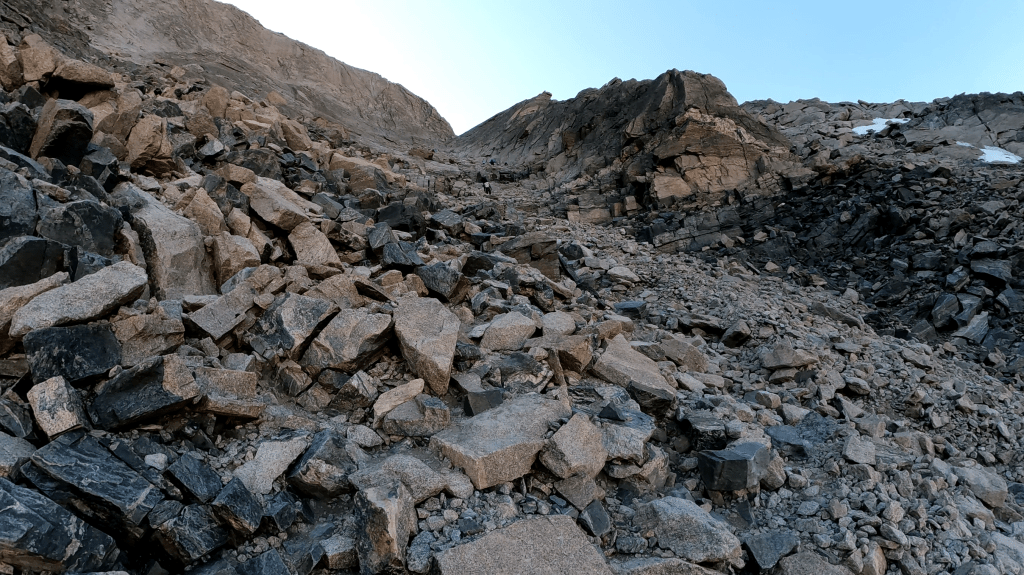
Looking up into the Trough
Until now, I had been capturing these photos from short videos I shoot on my adventures using a go-pro on my helmet. These days I’ve become pretty annoyed with it and I don’t like it intruding on the experience. From now on I’ll probably just get it out at breaks/transitions/anchors.
From the top of the Trough, the route crosses the SW face of the peak on narrow rock ledges to reach the Homestretch. The Homestretch leads to the summit and is easily the best climbing on the route, a blocky low angle square slot with plenty of options for fun movement on good rock.
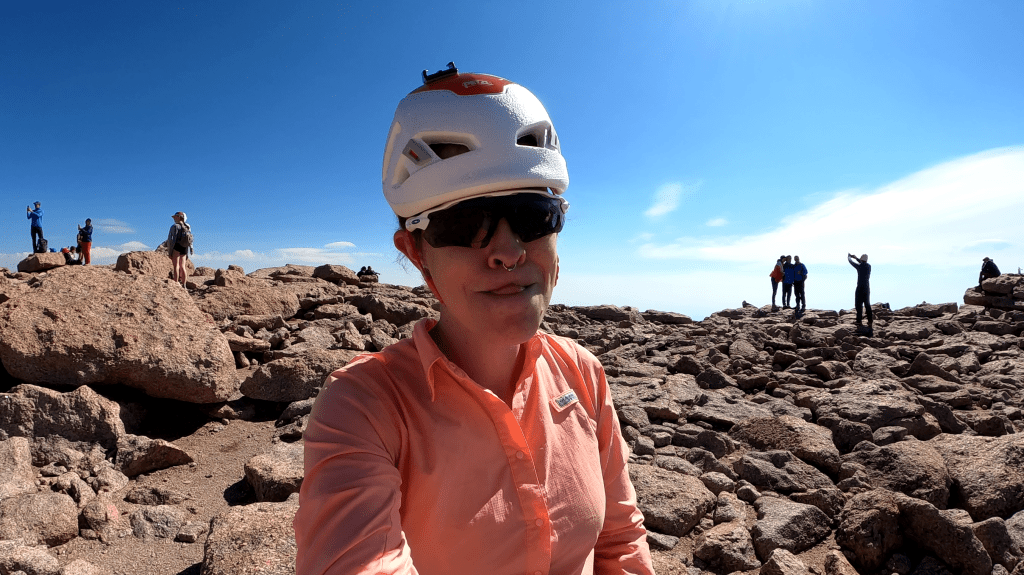
Summit snacking!
I made the summit around 11 AM and spent ~15 minutes there having some food and water. The forecast didn’t predict a storm so I felt I was in a good place. Down climbing the route to descend was pretty slow and and tricky but I had anticipated it would be. I can definitely see the appeal of rappelling the old Cables.
It felt good to finally reach the Keyhole and pass through, down on to the boulder field. I was surprised how good my legs still felt but I had finished my water and the heat of the day was intense. Thankfully the water I had seen on approach was still there. Before I filled up my bottles and dropped in their little chlorine tabs; I leaned in close and took a deep sip of the water that flowed off the incredible peak.
 About me