I had decided to focus on more technical ice and snow climbing for the winter of 2023/2024. At this point I didn’t have any steady climbing partners who would be up for such excursions, but that would soon change!
Doing a bit of research, I made a short list of moderate ice spots that would be accessible for me. My intention was to practice some skills and just get a feel for the movement on lower angle ice and snow slopes. That said, even in places like this, any un-arrested sliding fall can have serious consequences.
Starting out, I made a handful of trips to the Shining Rock on Little Haystack. In the summer this is a wet crusty slab and popular destination for hikers. The slope gets taller and icier as you traverse out from the Falling Waters trail access point.
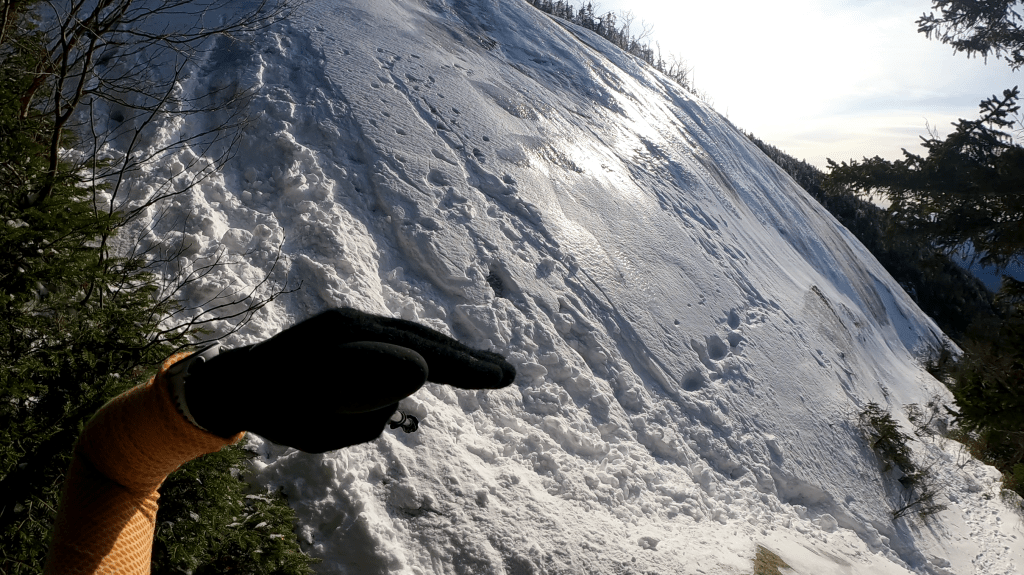
First tracks on the snow slope of shining rock
Every other weekend I would make the 2 mi/2000 ft approach, and head up the face. Observing the changing conditions, getting more comfortable soloing on the tools, placing ice screws. Eventually, I felt comfortable climbing the ice section to the top.

Moving on to the ice bulge
I found a key aspect to moving around solo in this terrain was to be very realistic about the limits of my skills and experience. Someone who has been at this their whole adult life may be totally in control cruising up vertical ice without a belay, but to achieve that takes years of consistent practice and a deep understanding of risk that only comes from experience. Even with a belay, ice climbing lead falls often result in serious injury. The tools and crampons really are the primary mode of protection.

Easy does it
It’s easy to think that forcefully driving the picks and crampon points deep into the ice would feel more secure but in practice this just wastes energy and more often than not ends up knocking out large “dinner plates” of ice, compromising the placement. I tried to focus on “flicking” the tools to get clean, solid sticks on the first swing, engaging the secondary crampon points, and never committing to a stance that felt out of balance or unsustainable.

View of Cannon Cliff from the top of Shining Rock
As the season progressed, the ice started to come in at lower elevations and I wanted to explore a spot with an easy approach to leave more time and energy available for climbing. Willey’s slide is a 500+ ft rock slab on the East slope of Mt. Willey that becomes a moderate alpine climb in the winter.
I set out with the intention of climbing the whole thing and considered setting up a rudimentary self-belay, but decided that my lack of experience with such a system would probably just increase the likelihood of making a climbing movement mistake. Instead I opted for a double ended PAS that I would use to directly rest on ice screws if I got in over my head or needed a break. There are also easy escape paths on the edge of the slab that many use for descent

Snow slope approach on Willey’s Slide

Ice bulges and other climbing parties above
I waited for a weekend when there had not been a snow event during the week. Avalanche conditions were forecast “green” with sub-zero temps and 30 mph gusts. I figured I would be wearing most all my layers from the get go.
After a short, steep hike from the road, I found the base of the slide and hitched my pack to a tree. Double checking my gear and having a final think before setting off, I picked a line where I wouldn’t be directly beneath other parties higher on the slope.
The snow climb went well and I soon reached the first ice bulge. Carefully making my way higher, I felt pretty good and continued up through a more sustained ice section. Standing comfortably atop this feature on what seemed like a snowy ledge, I slowly realized that I was actually on an “onion skin” of superficial ice with powder snow beneath.
As I tried to make upward progress my feet would break through the thin ice, finding no purchase in the loose snow. The “bad fear” was creeping in and I recognized that the situation could go sideways quickly. I put that nervous energy into immediately beginning to down climb to a solid position.

Anchor practice and daisy resting on Willey’s slide
Finding good ice not far below, I placed two screws and clipped in directly. I gathered my thoughts and decided I wouldn’t push on any higher but instead use the opportunity to build an anchor and make my first V-thread. Getting a solid thread on my first try was pretty satisfying.
I down climbed all the way back to my pack at the base of the slide and took a snack break. I spent the rest of the day making laps up to the main ice flow, traversing around, and down climbing. In retrospect I was grateful to get off with only some frost nip on a finger due to the chilly conditions and plunging-hands-into-snow-over-ice nature of the lower section.
March rolled around and with temps starting to rise the ice flows of the greater White Mountains would soon disappear as quickly as they came. My search for a partner had finally paid off and I was able to interest “D” in an ice climbing outing. D has quite a bit more technical climbing experience than I do but we share a conservative approach that places risk management and engaging adventure above any particular objective.
We arranged to meet up for coffee and some planning before heading out for a day at Cathedral Ledge. A popular rock climbing spot in the summer and fall, high quality ice comes in with routes ranging from easy top roping to multi-pitch classics.

Warm up bulge on the extreme north end of cathedral ledge
We decided we would stick to top roping and set up our system on a small bulge just beyond the popular routes of the North End area. We practiced our belay and communication while taking laps until we both felt ready to take on the pillars proper. D was super kind with sharing their experience and I was learning like a sponge all day.
Negotiating a spot on the main wall, we set an anchor on a single stout tree back from the edge then rappelled down to the base of the climb. I offered D the first lap and put them on belay. It was exciting watching them climb and super gratifying to know that we were building trust in each other as well as our individual skills.

North end pillars of Cathedral in heavily picked out conditions
We spent all day hacking our way up and lowering off the picked out ice flow. This was some of the most sustained vertical ice I had taken on to date and it was an absolute blast. At one point we made a game of trying to climb as gently and efficiently as possible, slotting picks and points into the divots made by those who passed before us. We bumped the anchor around, taking advantage of the thicker pillars as other parties departed.
By the time darkness was closing in we had each taken a slip and weighted the rope as well as lowering off many times. We decided to get some dinner and call it a night. I also decided to call it an ice season, much richer for the experience.
 About me